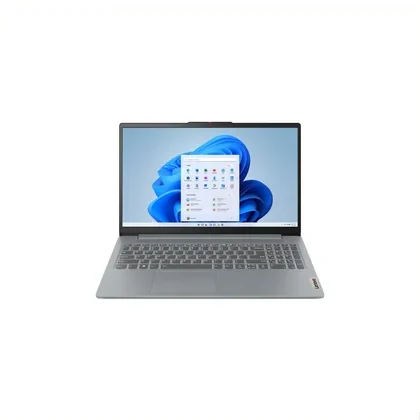
Lenovo IdeaPad Slim 3Laptop



.avif)
We rebuilt METIC’s stalled WordPress shop on Shopify, connected two supplier catalogues and created tools to keep product information up to date. Alongside the store, we developed a training platform with its own public website.
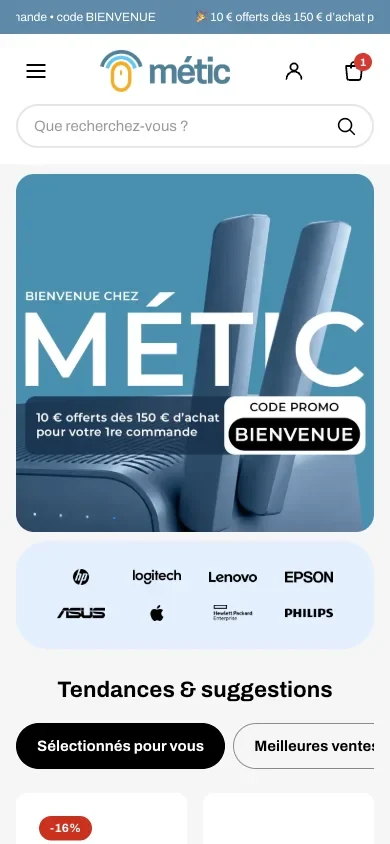
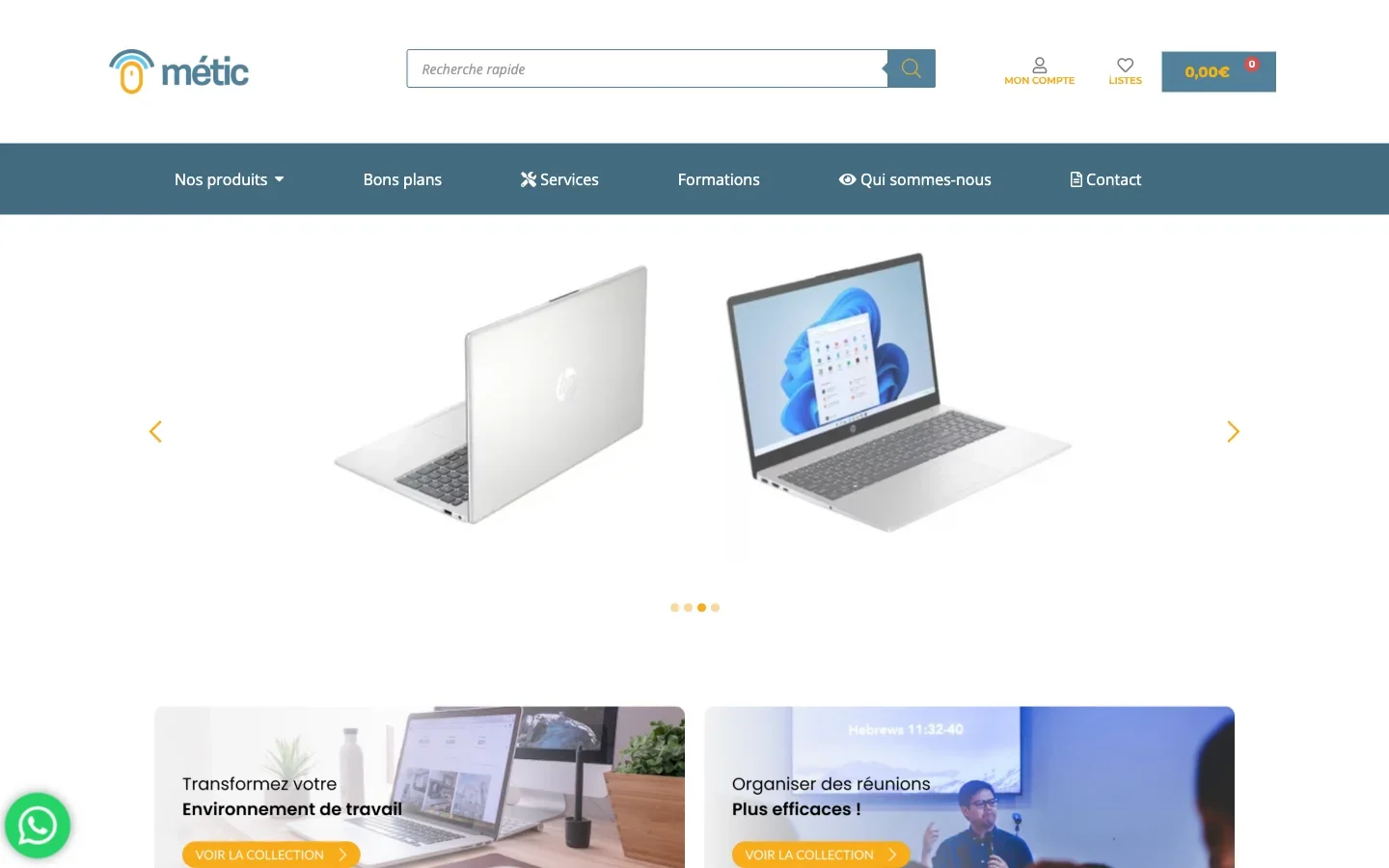
METIC sells IT equipment and provides professional training in Mayotte. Its WordPress shop looked presentable, but supplier imports were failing and product information was incomplete. Its training offer was managed through documents and a separate website.
We were asked to audit the shop and recommend a way forward. That assessment grew into a Shopify rebuild, tools for managing supplier data and a training platform connected to its own public website.
The goal was to reduce repeated manual work while keeping the team in control of what changes.
The audit on 30 July 2026 revealed slow loading, incomplete product records and unreliable supplier imports.
Mobile PageSpeed score
before the main image appeared
server response on uncached pages
home page, with 57 scripts and 71 stylesheets
plugins installed, six of them page-builder add-on packs
of 2,468 products without an image
of sampled products without a description
failed background tasks, mostly linked to supplier imports
METIC sells what two local distributors stock. Each supplier provided different parts of the information, and neither supplied a complete record ready for the shop. We needed to bring those sources together, identify the products correctly and make the catalogue easier to maintain.
We documented the findings in a 20-page report and compared four platform options, from repairing the existing site to a modern self-hosted solution. The assessment included first-year costs at three sales volumes, alongside local payment and operational requirements.
We mapped what each supplier actually provided. One stock report contained a complete catalogue export, allowing a single request to replace a crawl across around a hundred pages.
METIC’s team works in French and uses spreadsheets. We kept catalogue rules visible in a workbook they could understand, and built tools that preview changes before applying them.
Decoding one supplier’s manufacturer references increased matches in an open product database from 22% to 56%. Manufacturer websites and AI-assisted research supplied the remaining content.
published products with French content and photos
The 56% figure describes matching in that one database; it is not the final catalogue-completion rate.
Two connected workflows: supplier information into the shop, and course information from the training platform to its public website.
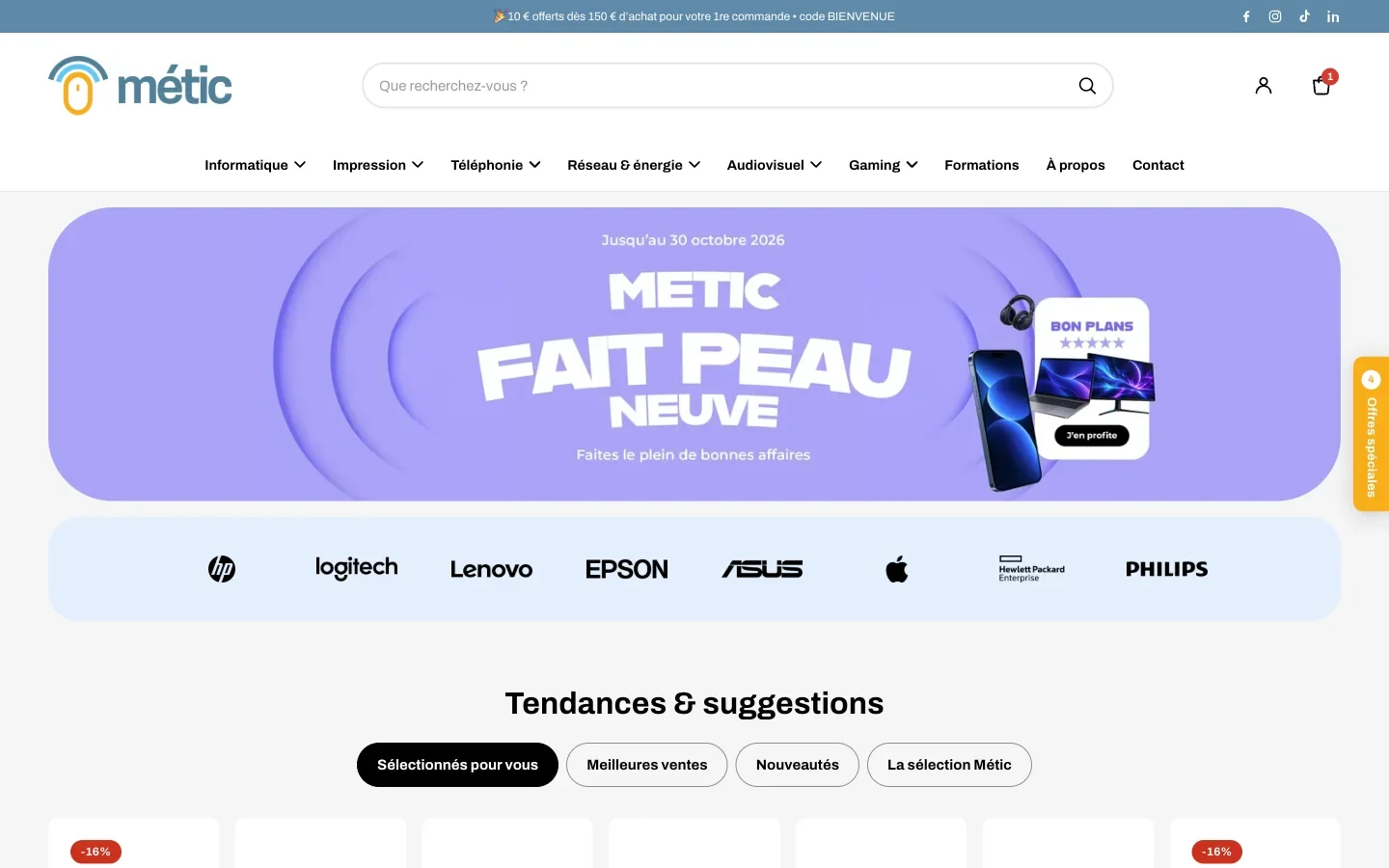
We created a custom theme with navigation across seven product families, filters for the details customers need when comparing equipment, dedicated mobile layouts and product pages showing availability and delivery information.
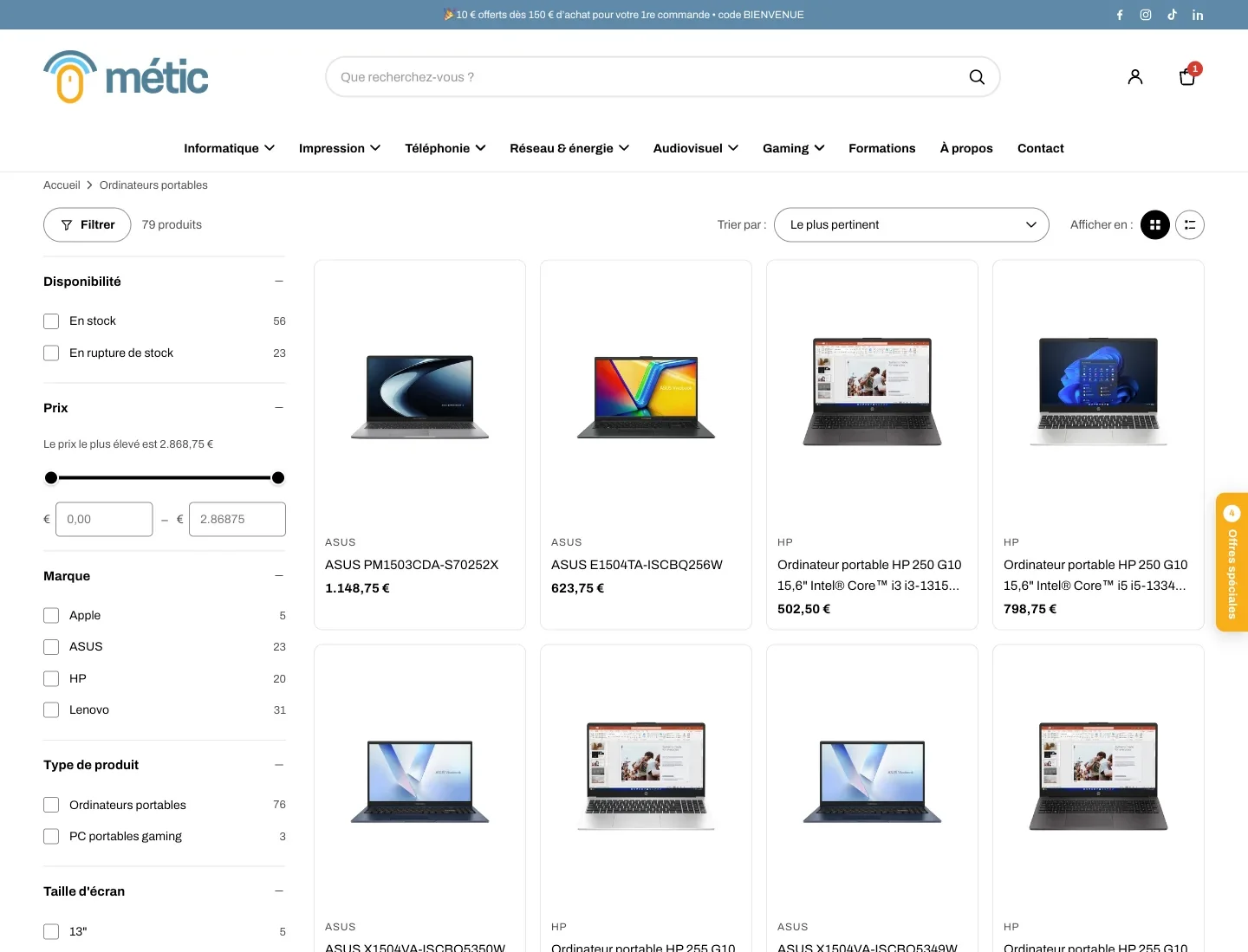 1Filters by availability, price, brand, type and screen size2Live product count for every collection3Photos trimmed, centred and normalised to 1600 px4Brand above every title, read from the record
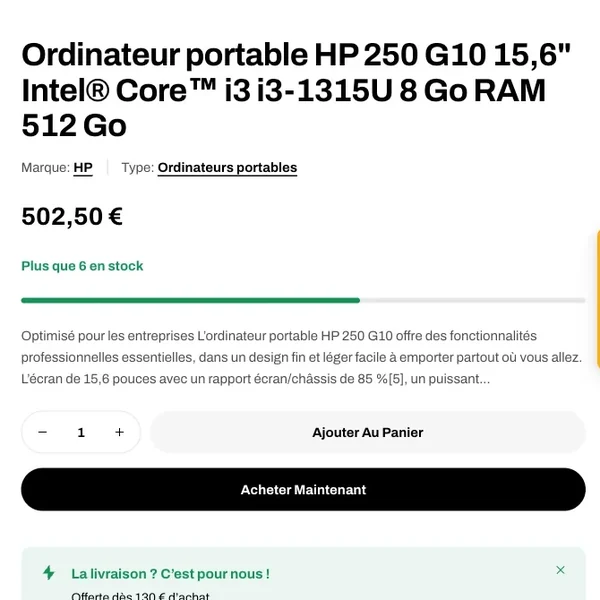
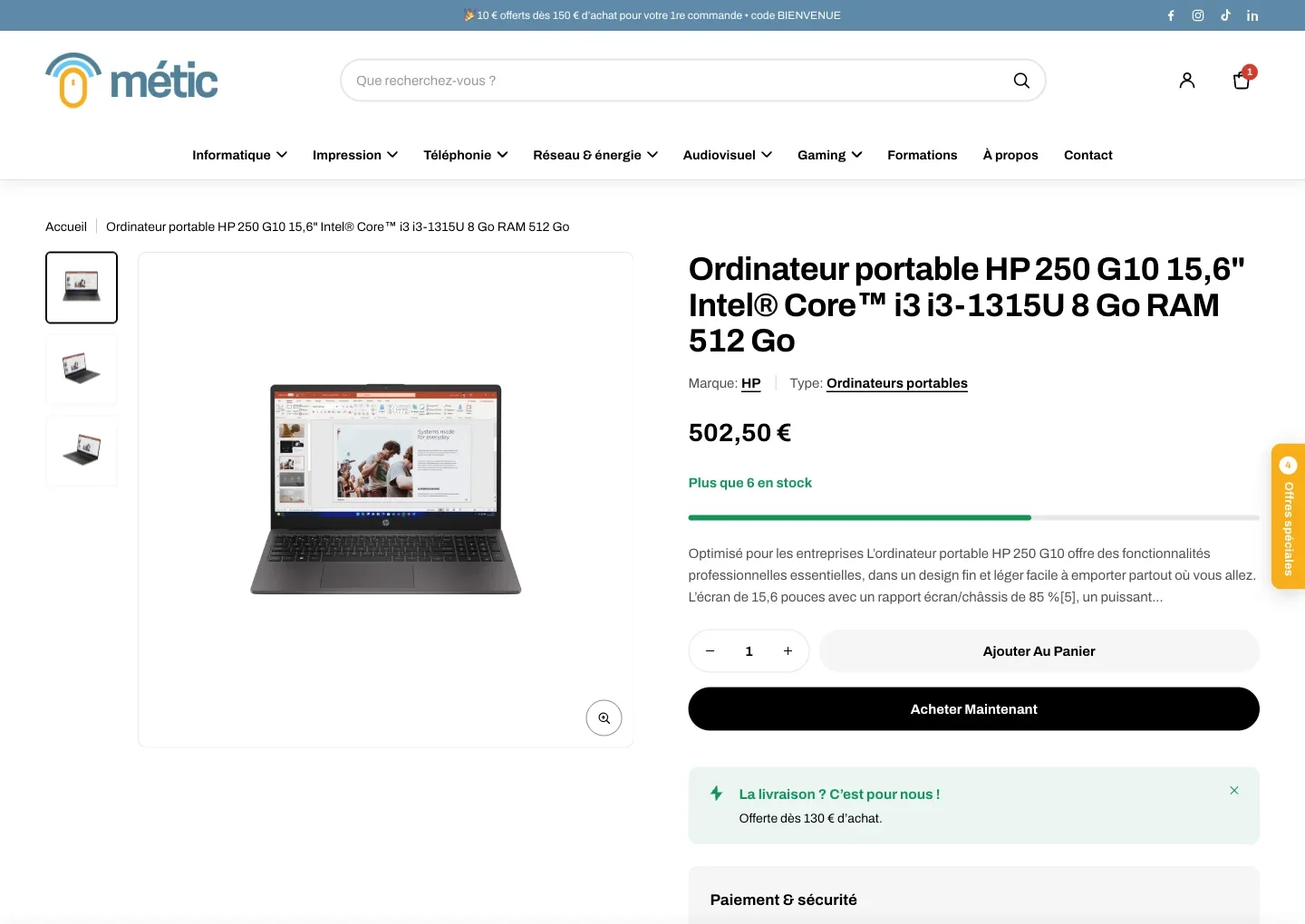 1Brand and type link into their collections2Live availability, straight from the sync3Free-delivery threshold on every product
The migration covered products, stock, images, collections, menus and the French locale, with every count checked against the source.
curated products
product images standardised to 1600 px
collections organised by brand and product type
five delivery zones, three weight bands, plus two pickup points

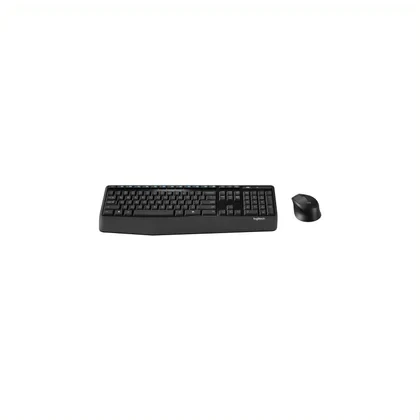

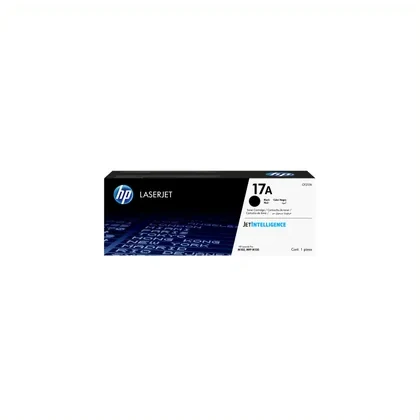
Supplier files were often 225–500 px, and some had no photo at all. Every store photo is trimmed, centred and exported at 1600 px.
The store’s operational setup includes a shared pricing rule, checked shipping weights and delivery zones adapted to METIC’s requirements. Stock remains synchronised across the two pickup points.
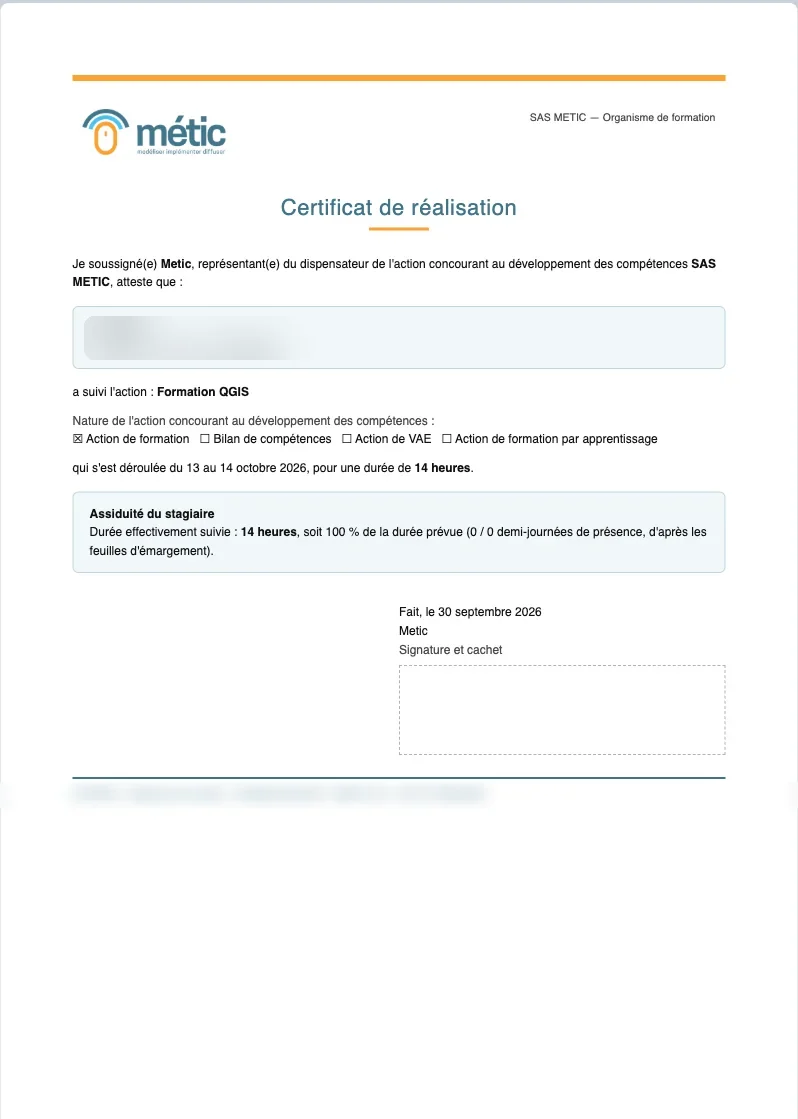
We developed a French-language platform for 34 courses and 84 scheduled sessions. It manages course information, enrolment requests, staff approval, tablet attendance sheets with a paper backup, and completion certificates generated from attendance.
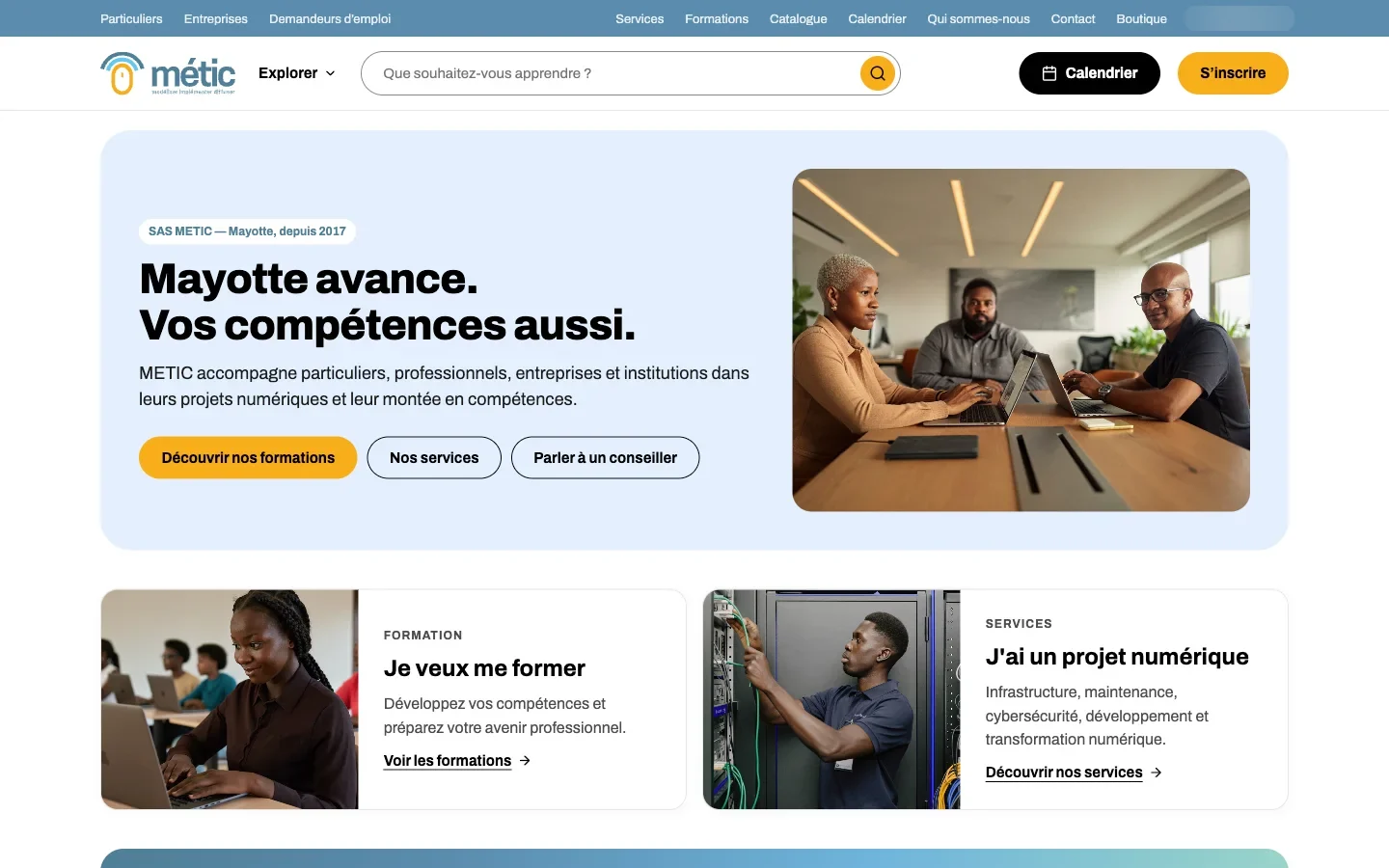 1Generated from the platform, rebuilt on publish and every six hours2Enrolment requests go to staff for approval3Illustrations made with AI image generation, approved one by one
The public website is generated from the same course and session records. It rebuilds when information is published and every six hours, so the team does not have to maintain a second course catalogue by hand.

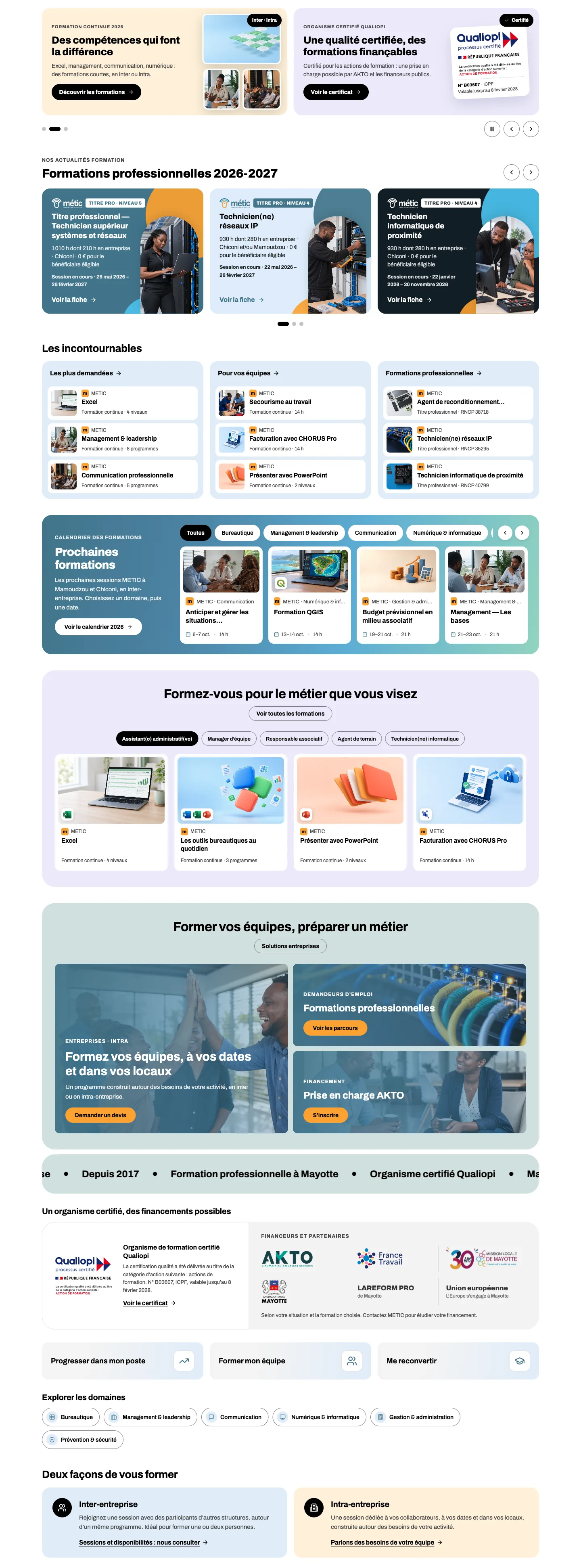
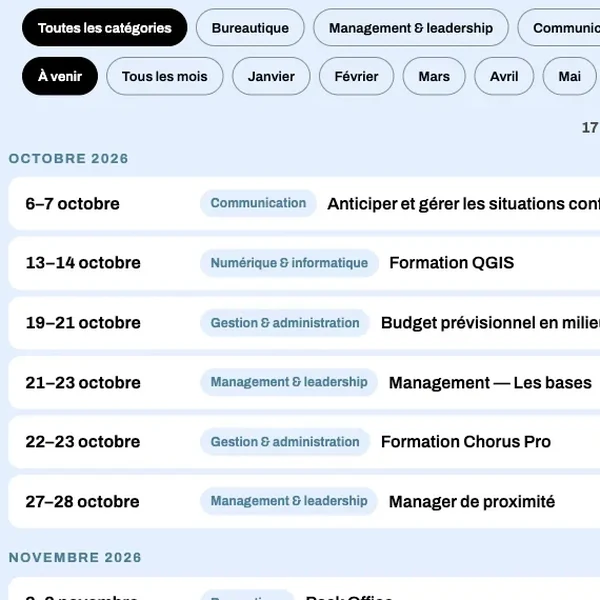
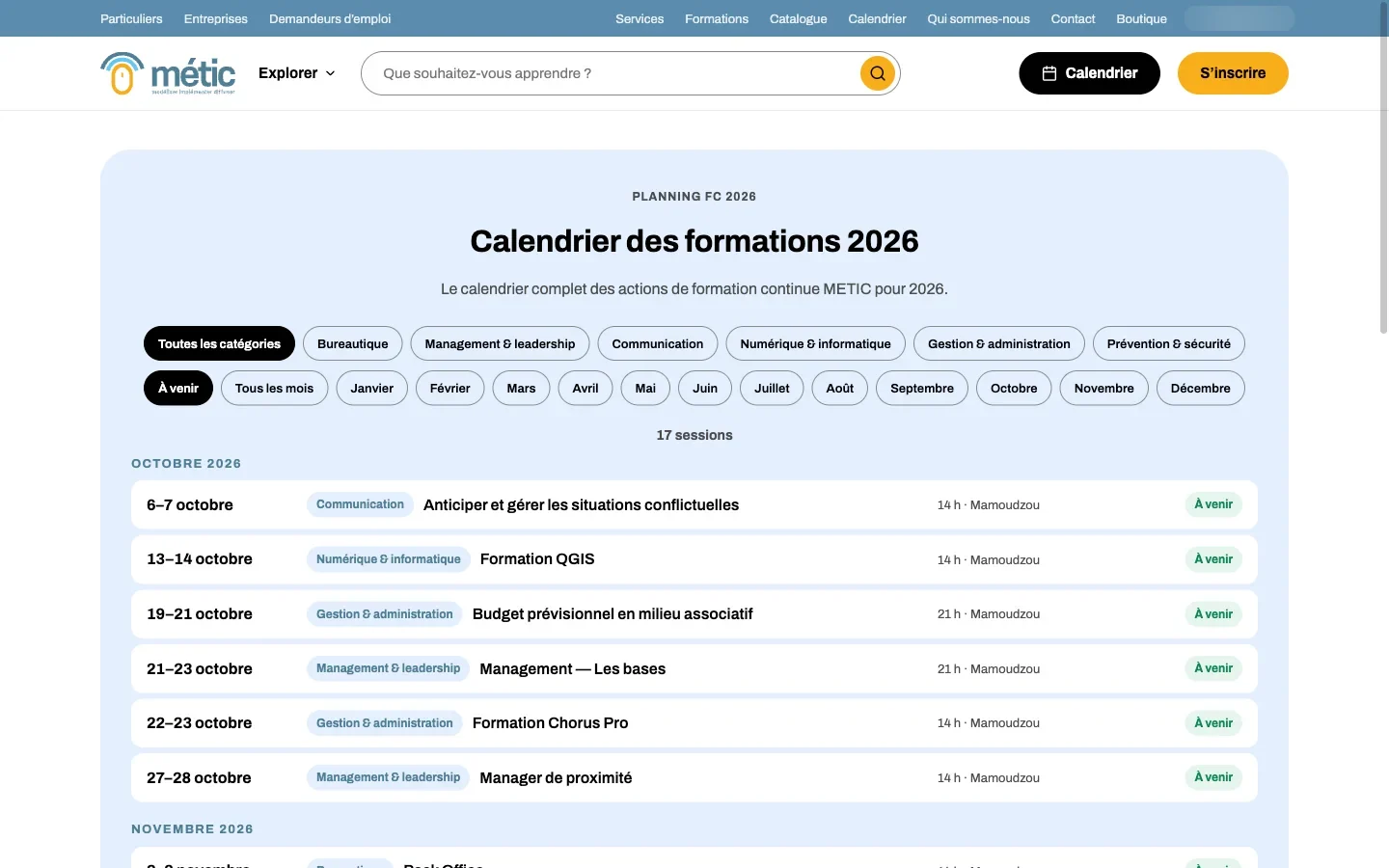 1Filter by category and by month2Every session comes from the back office3Duration and location on each session4Status updates on its own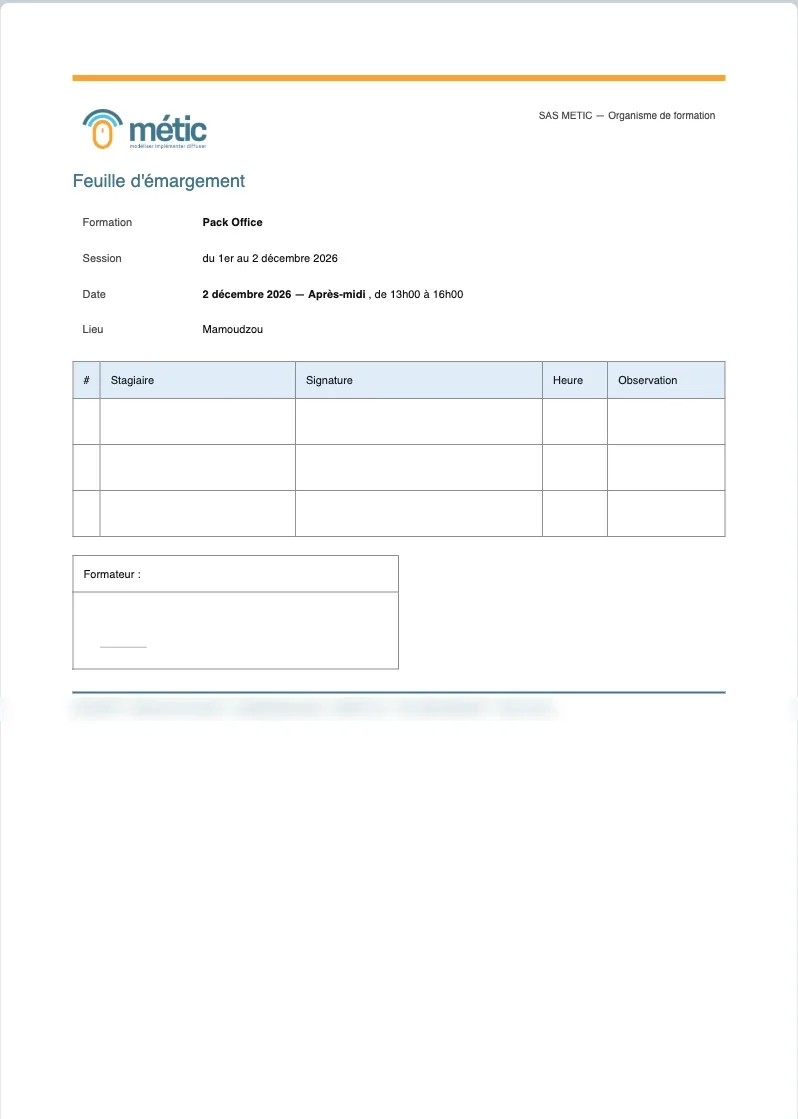
The work also called for supporting tools. They help prepare and check information, with review before it reaches the store.
Retrieves data from both suppliers, keeps a history and highlights new references and catalogue discrepancies.
Researches products and drafts French product sheets. Automated checks examine sources, figures and image dimensions; a person approves each sheet.
Turns inconsistent supplier images into standardised product visuals.
Keeps pricing, status and tax rules visible, with a preview of proposed changes.
Protects catalogue data before bulk changes and supports restoration by product.
Keeps new pages and materials consistent with METIC’s visual identity.
A small French-language web app. Its home screen lists what needs attention, including where the store has drifted from the catalogue on price, stock or status.
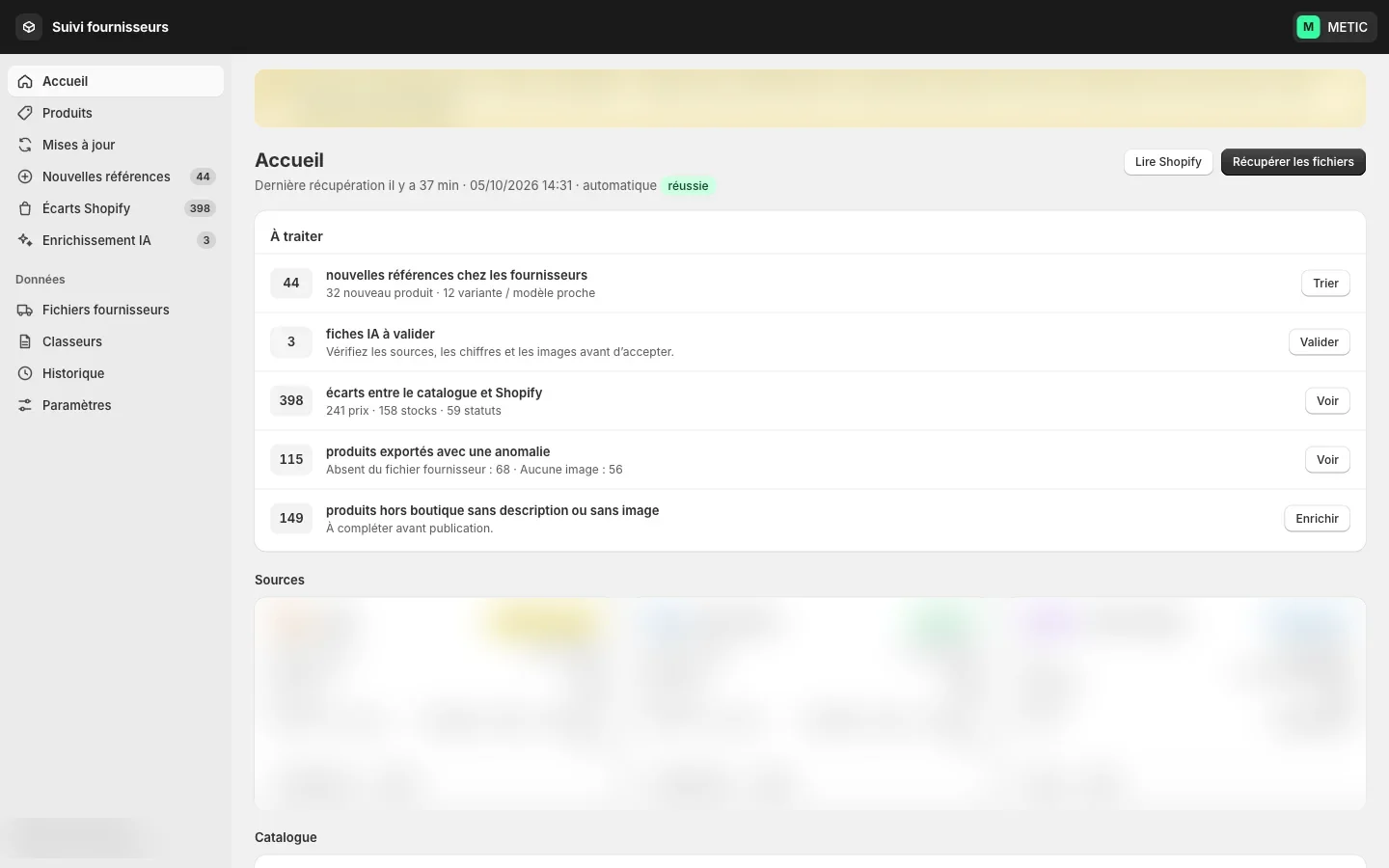 1New references, sorted into new products and close variants2Where the store drifted on price, stock or status3Fetch on demand, or automatically each morning
The measured AI research cost was approximately $0.27 per product. Low-confidence matches are flagged, and nothing enters the workbook without validation.
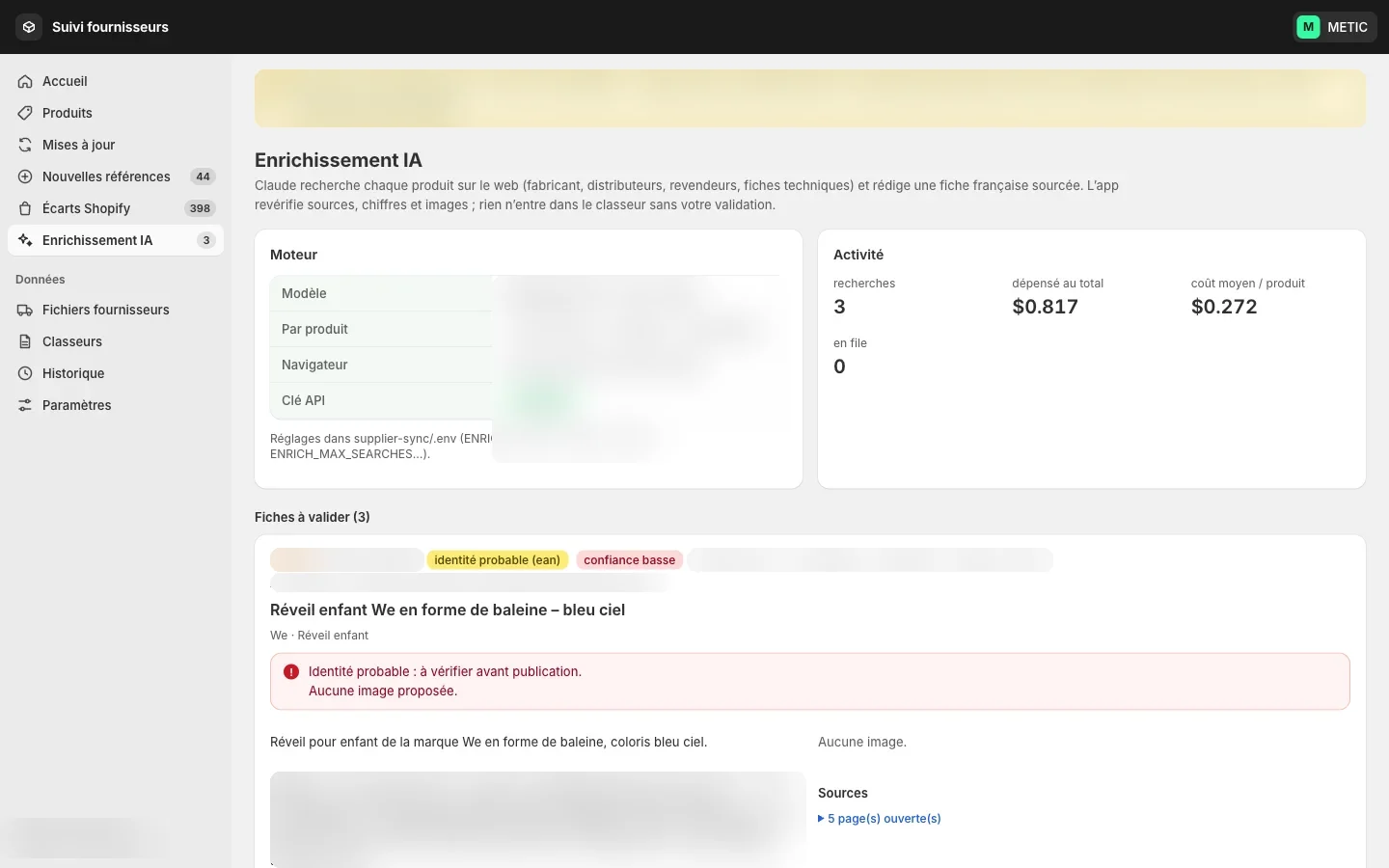 1Measured cost: about $0.27 per product2Low-confidence matches are flagged, never published3Every source must actually have been opened4Nothing enters the workbook without validation
The project progressed from the initial audit through platform selection, catalogue preparation, storefront development and the training-system build. It represented approximately 340 hours of senior work.
AI-assisted engineering supported delivery throughout, alongside technical review, testing and approval. The workstream breakdown is an estimate.
A custom Shopify storefront, a curated catalogue, supplier-data tools and a training platform connected to its public website.
Together, these provide a foundation for managing the shop and training activity with less repeated data entry and clearer control over updates.
Our services:All services | Custom software | E-commerce | Websites and branding | Business systems | Mobile applications | AI and automation | Technology consulting | Meta Field | Work
Meta Mind Lab is a software and digital studio based in Mauritius. We build custom software and web applications with Next.js, TypeScript and PostgreSQL, mobile apps for iOS and Android with React Native, and online stores on Shopify and WooCommerce, from the catalogue and payments to shipping and supplier data. For brands, we design websites and visual identities and support them with SEO and Google Ads. We connect business systems so information stops being copied by hand, and bring AI and automation into everyday work, with people in control. Need direction first? Technology consulting helps you choose the right platform. For field service teams, Meta Field handles scheduling, signed reports, invoicing and accounting. See how it comes together in our case studies and product imagery and motion.
Industries:Hospitality and tourism | Retail and e-commerce | Food and beverage | Beauty and cosmetics | Professional services | Automotive | Logistics | Real estate | Healthcare | Engineering | Agriculture | Equestrian businesses